


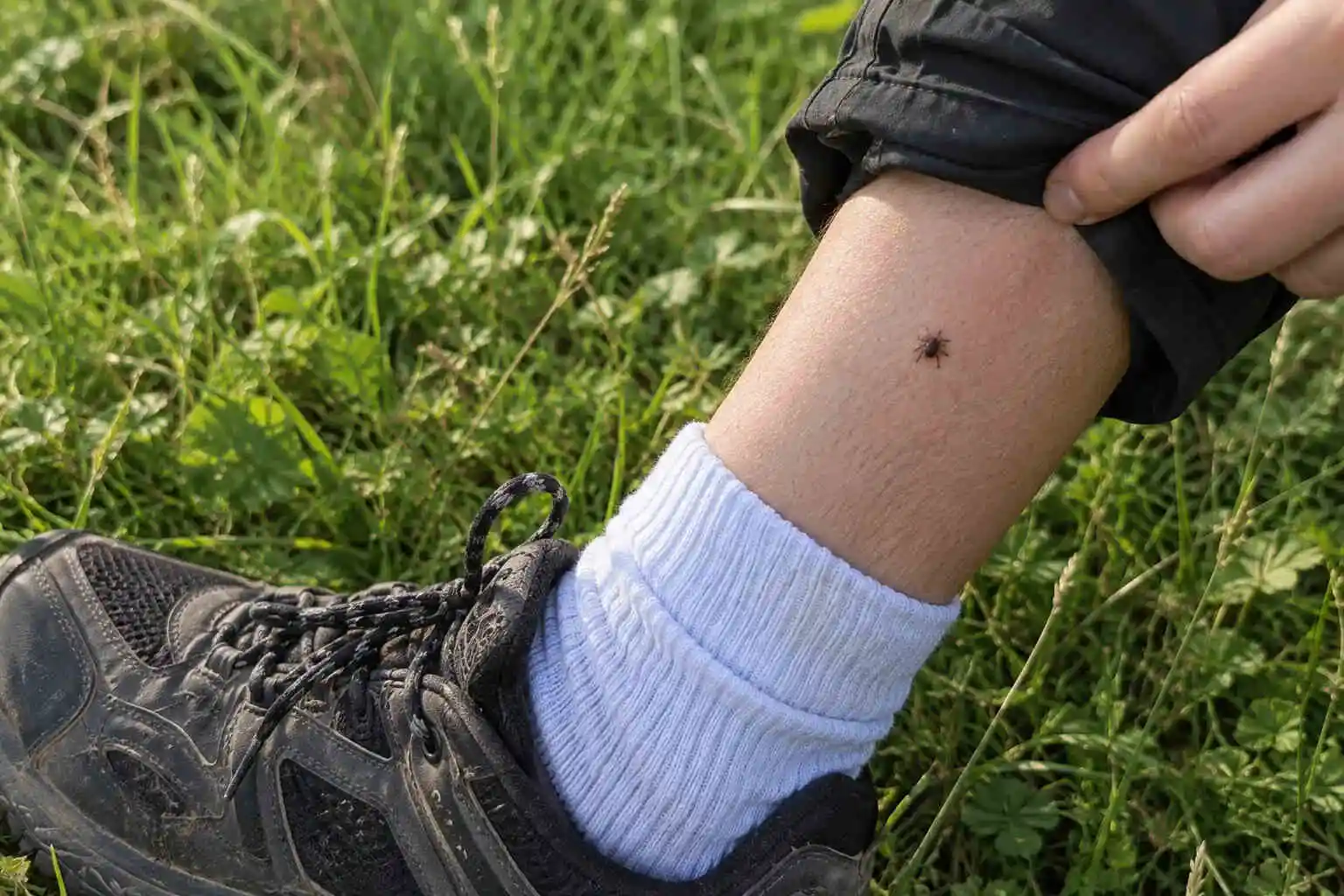
Here’s how to remove a tick safely: if you’ve found one attached to your skin, remove it right away. Grasp it close to the skin with clean, fine-tipped tweezers and pull straight up with steady, even pressure. Don’t twist, squeeze, or wait until you can see a doctor first. The CDC’s tick removal guidance is clear that delaying removal raises the risk of a tickborne infection, so the tick needs to come out as soon as you spot it.
How to Remove a Tick Safely
- Use fine-tipped tweezers. If you don’t have any on hand, regular tweezers or even clean fingers will work in a pinch, but fine-tipped tweezers give you the most control.
- Grasp the tick as close to your skin’s surface as possible, right where its mouthparts enter the skin, not by the body.
- Pull upward with steady, even pressure. Don’t twist or jerk the tick. A slow, straight pull is what gets the whole tick out without leaving mouthparts behind.
- Clean the bite site and your hands with soap and water, rubbing alcohol, or hand sanitizer once the tick is out.
What Not to Do
Skip the folklore remedies. Petroleum jelly, a lit match, nail polish, or any other substance meant to “suffocate” the tick into releasing can backfire. The CDC specifically warns that these methods may cause the tick to force infected fluid into the skin, which raises the risk of infection instead of lowering it. Steady pressure with tweezers is still the safest method available.
After You Remove the Tick
Once it’s out, you have a few options for disposal: seal it in a container, wrap it tightly in tape, flush it, or drop it in rubbing alcohol. Check the rest of your body, and your kids’ or pets’ fur, for any other ticks that may have hitched a ride from the same yard or trail. It’s worth jotting down the date and roughly where the bite happened (a backyard, a trail, a specific town) since a doctor will ask when and where it occurred if symptoms show up later.
Tick Bite Symptoms to Watch For
Most tick bites heal without any issue once the tick is removed. Still, the CDC advises seeing a healthcare provider if a rash or fever develops in the weeks after a bite. Lyme disease is one of several illnesses ticks in New York can carry, but it’s not the only one, and a rash or fever after a bite is the signal to get checked rather than a reason to assume the worst. Removing the tick quickly and correctly is still the single biggest thing you control in the moment.
Simple Habits That Catch Ticks Before They Bite
A few habits go a long way toward catching ticks before they ever attach. The CDC recommends showering within two hours of coming indoors, since it washes off ticks that are still crawling and haven’t bitten yet. A full-body check in front of a mirror after spending time outdoors catches the ones that did attach, especially in spots that are easy to miss: behind the knees, the scalp, underarms, and the waistband. Ticks also ride inside on clothing, gear, and pets before attaching to a person later, so coats, day packs, and pets are worth a quick check too.
Why Ticks Keep Showing Up in Westchester, Long Island, and NYC Yards
Tick season doesn’t end with summer in this region. Putnam County’s health department notes that adult ticks become active again in the fall, and while colder temperatures slow them down, they survive through the winter rather than disappearing, so a bite in October or November isn’t unusual. Beyond the season, ticks don’t need much to set up shop close to your house. Leaf litter along a fence line, tall grass at the edge of a lawn, stacked firewood, and the shaded border where a yard meets woods or brush are exactly the conditions ticks look for, and they’re common in Westchester, Long Island, and the outer boroughs alike. Deer traffic through a property adds another layer, since deer carry ticks from wooded areas directly into backyards. None of this means a yard has to stay off-limits. It means the areas that actually matter (the edges, not the middle of the lawn) are where tick control for yard pests needs to focus.
What a Professional Tick Yard Treatment Involves
A single round of tick spray for yard pests usually isn’t enough if ticks keep turning up on people or pets. Optimum Pest Control starts with a free inspection to find exactly where ticks are hiding on a property (leaf litter, high grass, wooded edges) and builds a tailored tick control plan from there. Treatments are eco-friendly and safe for people and pets, and the visit includes cutting back the conditions, like overgrown grass and leaf litter, that let ticks move in to begin with. Follow-up visits and ongoing monitoring are part of the plan, and if ticks return after treatment, Optimum retreats the property at no additional cost. Same-day service is available if you call before noon.
A family-run business with 20+ years in the Westchester, Long Island, and NYC area, Optimum Pest Control holds a 4.9-star rating from 400+ Google reviews. For a tick exterminator who can inspect your property and start treatment the same day, see Optimum’s tick control service or call 516-509-8362.

